April 27, 2026 • Saoirse Pellegrini • 9 min reading time • Prices verified June 17, 2026
Platinum Wig Decision Path: Short Curly Marilyn vs. Everything Else
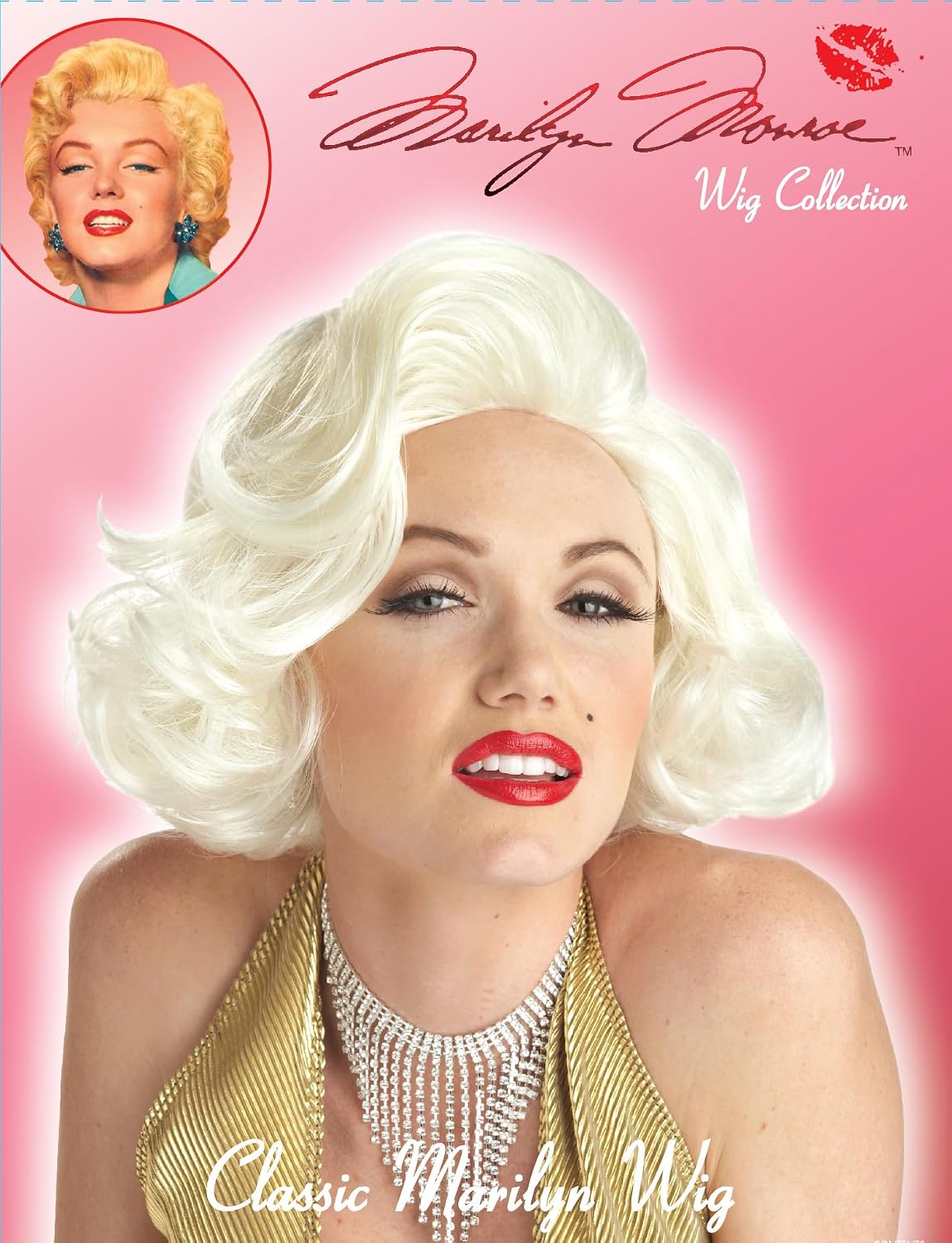
If you’ve ever searched “Marilyn Monroe costume wig” and ended up drowning in a sea of nearly identical platinum blonde options, you’re not alone. A platinum wig is simply a very light, almost white-blonde hairpiece — and the Marilyn Monroe look has inspired hundreds of them. The most iconic version is the short curly style: finger waves and soft ringlets that sit just above the jaw, recreating the look Monroe wore in photographs from the late 1950s that have since become the defining image of the costume. But “short and curly” isn’t the only option on the shelf, and picking the wrong silhouette for your event — or your budget — is one of the most common mistakes first-time buyers make. This guide walks you through every major wig category, explains the real tradeoffs, and ends with a clear decision rule so you know exactly what to buy before you click.
The Short Curly Marilyn: What You’re Actually Buying
Let’s start with the most searched option, because it deserves a proper explanation before we compare it to anything else.
The short curly Marilyn wig typically features:
- A cap length of roughly 8–10 inches from the crown to the tips
- Finger waves at the temples — waves that sweep flat against the forehead, a styling technique popularized in Hollywood glamour photography of the 1930s through 1950s
- Soft ringlets or barrel curls at the sides and back, sitting close to the jaw
- A side-swept bang or off-center part
- A color in the range of platinum blonde to ice blonde, sometimes with a barely-there silver shimmer
This silhouette is drawn directly from Monroe’s look between roughly 1953 and 1962 — the era of Gentlemen Prefer Blondes, Some Like It Hot, and the famous Madison Square Garden birthday performance. Vanity Fair, in their profile piece “How Marilyn Monroe Became Fashion’s Eternal Muse,” describes how Monroe’s hairstylist Kenneth Battelle kept her hair intentionally short and tightly styled to maximize her face shape on camera — which is exactly why this look photographs so well in costumes today.
Who this is for: Anyone doing a recognizable, event-ready Marilyn look on any budget. It’s the most purchased wig style in the category by a wide margin, which means the widest range of price points and quality tiers.
Who this is NOT for: Buyers recreating a specific film scene with a looser, longer wave; theatrical productions needing a custom fit; or burlesque performers who want a more fashion-forward interpretation that won’t read as an obvious costume.
By the Numbers: Wig Category Snapshot (2026 Market Pricing)
| Wig Style | Typical Price Range | Cap Construction | Audience |
|---|---|---|---|
| Short curly Marilyn (costume-grade) | $18–$55 | Basic wefted cap | First-time buyers, single events |
| Short curly Marilyn (heat-resistant fiber) | $55–$95 | Monofilament part | Repeat wearers, cosplayers |
| Short curly Marilyn (human hair / pro) | $150–$400+ | Lace-front, full hand-tied | Tribute artists, theatrical |
| Medium wave / Old Hollywood wave | $35–$120 | Wefted to mono | Themed parties, photo shoots |
| Long platinum wave (Some Like It Hot era) | $45–$150 | Wefted to mono | Cosplay, specific scene recreation |
The Full Decision Landscape: Every Competing Style Compared
Here’s where most guides stop short. They describe the short curly wig, drop a product link, and leave. But the short curly style is only the right answer for some buyers, and knowing the alternatives helps you avoid a $60 mistake. The three major style alternatives break down clearly by use case, budget, and how much recognition you need your costume to carry on its own.
Short Curly Marilyn Wig
The short curly silhouette is the recognition shorthand for the entire Monroe costume category. Smithsonian Magazine, in their profile of Monroe’s cultural legacy, notes that the short, tightly curled platinum style is the hairstyle most immediately associated with her image in popular memory — it’s the version reproduced in merchandise, art prints, and decades of media reference. If you need people to know who you are without reading a name tag, this is your answer.
At the budget tier ($18–$55), the short curly style is also the most forgiving silhouette when construction quality is limited. Tight curl patterns hide imperfect wefting and inconsistent fiber texture far better than loose waves or long straight styles do. For a single Halloween event or themed party where the wig spends four hours on your head and then goes in a drawer, this is the clear winner.
California
$10.80
In stock on Amazon
Check price on AmazonMedium Wave / Old Hollywood Wave Wig
This style runs 10–14 inches and features loose, horizontal S-waves — also called Marcel waves, a heat-curled wave pattern named after the French stylist Marcel Grateau. It reads as “glamorous blonde” more than “unmistakably Marilyn,” which is either a feature or a bug depending on your event.
InStyle, in their reader wig roundup “Best Costume Wigs Reviewed by Readers,” notes that medium-wave platinum styles are consistently rated higher for comfort and wearability over multi-hour events compared to tightly curled short styles. The wave pattern creates less bulk at the nape of the neck and retains less heat — meaningful for a full convention day or a long reception.
The tradeoff is recognition. At a party, the medium wave requires a complete costume package — the dress, the jewelry, the makeup — to register as “Marilyn.” The short curly silhouette carries the identification on its own. But for burlesque performers, photo-shoot stylists, and vintage devotees who want the Monroe aesthetic without the costume shorthand, the medium wave at the $75–$120 range offers a look that photographs as glamorous vintage rather than obvious party costume.
 product image](/images/external/51d98e07b45d.jpg)
BERON
$18.99
In stock on Amazon
Check price on AmazonLace-Front Platinum Wig (Professional Construction)
A lace-front wig has a sheer mesh panel along the hairline where individual hairs are hand-tied, creating the illusion that the hair is growing from your scalp. Standard costume wigs have a hard, visible edge — fine at a party, but immediately obvious under stage lighting or close-up photography.
Harper’s Bazaar, in “The Definitive Guide to Wearing a Wig,” draws this distinction clearly: lace-front construction is the minimum specification for anything performed on stage or shot under professional lighting. The hairline visibility issue that reads as “fine” at a costume party becomes a significant visual problem under a spotlight or in a photograph taken within ten feet.
Lace-front wigs in the platinum curly style start around $75–$95 for quality synthetic fiber and climb to $300–$400 and above for human hair options. That’s a meaningful jump from the costume-grade tier. But for tribute artists, theatrical production wardrobe departments, and photo-shoot stylists, the construction pays for itself by eliminating post-shoot editing time and hairline edge corrections. Vogue’s coverage of Old Hollywood hair revivals, in the piece “The Return of Old Hollywood Hair,” specifically highlights that lace-front construction has become an industry standard expectation for any performance context where Old Hollywood styling is the brief.
The style choice at this investment level — short curly, medium wave, or long wave — should be driven by your specific scene or performance context. At this construction quality, any silhouette is viable. But the hairline investment is non-negotiable.
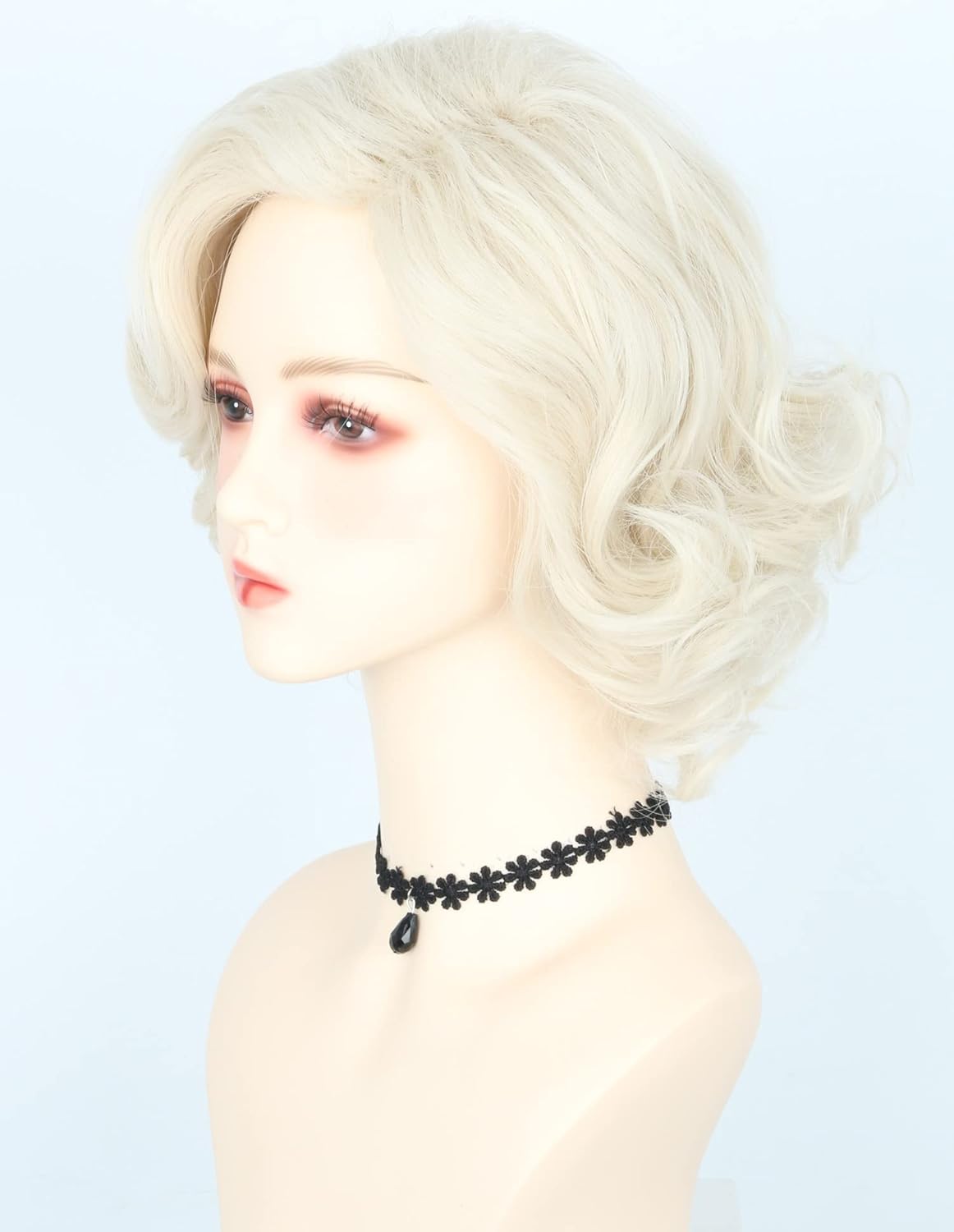
Women's
$19.99
In stock on Amazon
Check price on AmazonThe Long Platinum Wave: The Specialist Option
Before reaching the decision framework, one additional style warrants its own discussion because it’s frequently searched but frequently misunderstood as a purchase.
The long platinum wave at 16–22 inches recreates Monroe’s look from early 20th Century Fox promotional photography and selected scenes from Some Like It Hot (1959). It is a less common choice for Halloween but has seen sustained interest among cosplayers and vintage fashion devotees building full scene-specific looks rather than general party costumes. Vogue’s “The Return of Old Hollywood Hair” documents this trend toward scene-specific cosplay precision as distinct from the broader costume category.
The critical tradeoff: longer wigs at lower price points tangle significantly more than shorter styles. Buyers reviewing costume-grade long wigs (under $50) across major retail platforms consistently flag that these wigs require styling work out of the box, while the short curly option in the same price range is more likely to arrive event-ready. If you want the long wave look, the $100-and-above tier is where construction quality handles the length reliably. Below that, you’re committing to styling time before every wear.
The Three Real Variables: How to Make the Call
After reviewing published guidance from the Costume Society of America’s resources on period-accurate Hollywood styling, aggregated buyer review patterns, and editorial coverage across Vanity Fair, Harper’s Bazaar, InStyle, and Vogue, the decision narrows to three factors that determine which wig is right for your situation.
1. Recognition vs. Fashion Flexibility The short curly silhouette maximizes recognition. The medium wave gives you a look that functions as vintage fashion statement and costume. If you need people to know instantly who you are, choose the short curly. If you want dual-purpose wearability, choose the medium wave.
2. Event Duration and Physical Comfort Short wigs with tight curl patterns tend to be lighter and cooler. For a four-plus-hour Halloween party or a full convention day, weight and heat retention matter. Long wigs at the costume-grade tier draw consistent comfort complaints after two to three hours. Short curly wigs do not generate the same pattern of feedback.
3. Budget Tier and Construction Quality This is the math worth showing explicitly:
- Under $40: Short curly, costume-grade cap. Most forgiving silhouette at limited construction quality.
- $55–$95: Heat-resistant fiber with monofilament part construction. Restyling options open up. Short curly is still the best recognition-to-value ratio at this tier.
- $150 and above: Lace-front and human hair options become viable. Style choice is genuinely open — choose based on your performance or scene context.
The Decision Rule
Single Halloween event or themed party, budget under $55: Buy the short curly Marilyn in a costume-grade cap. It’s the most recognizable, most forgiving, and most event-ready option at this price point. Don’t chase a longer or looser wave style at this budget — the quality gap shows clearly.
Cosplayer, repeat wearer, or planning more than one event: Step up to the heat-resistant fiber tier ($55–$95) with a monofilament part. The short curly style remains the strongest recognition choice, but this construction gives you restyling options and more natural part lines across multiple wears.
Theatrical performer, tribute artist, or photo-shoot stylist: Lace-front construction is non-negotiable. Choose your style — short curly, medium wave, or long wave — based on the specific scene or performance context. But do not compromise on the hairline construction. It will be visible, and the costume-grade cap edge will undermine every other investment you’ve made.
Vintage fashion statement over instant costume recognition: The medium wave platinum style at $75–$120 gives you a glamorous Old Hollywood look that photographs beautifully without reading as a party costume. This is the pick for burlesque, fashion shoots, and vintage devotees who want the Monroe aesthetic without the costume shorthand.
The short curly Marilyn wins for most buyers, most of the time — because most buyers need recognition, speed, and value from a single purchase. But now you know exactly when it doesn’t win, and what to reach for instead.