June 4, 2026 • Saoirse Pellegrini • 8 min reading time • Prices verified June 17, 2026
The White Halter Dress Breakdown: Fabric, Flounce, and Which One to Buy
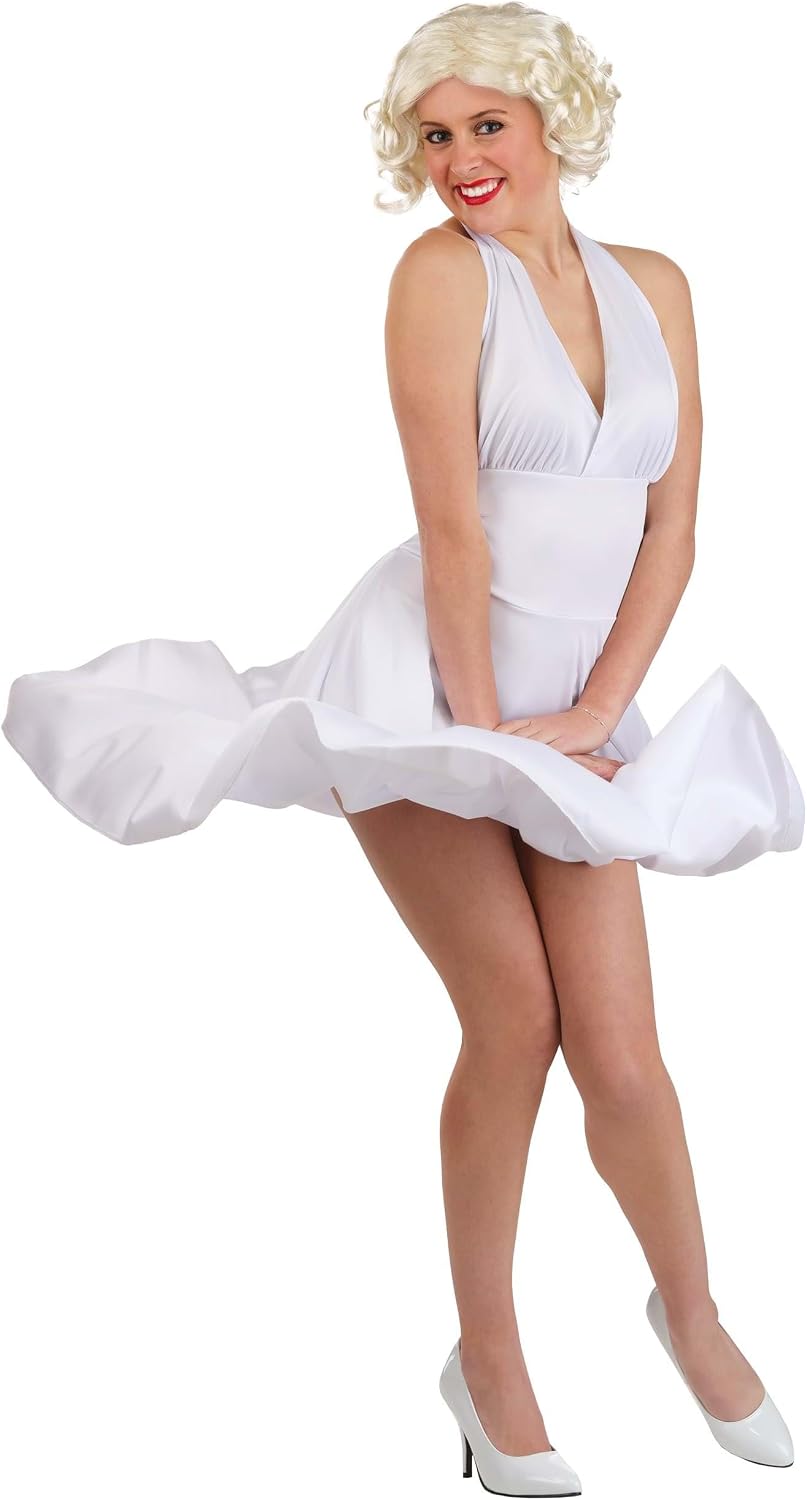
If you’ve ever typed “Marilyn Monroe Halloween costume” into a search bar, you already know what shows up: a white halter dress with a flared skirt, usually paired with a blonde wig. That dress is the one Marilyn Monroe wore in the 1955 film The Seven Year Itch — the scene where she stands over a subway grate and the skirt billows up. Smithsonian Magazine has called it one of the most recognizable costumes in American pop culture history. The dress itself was designed by William Travilla and was a white halter — meaning it ties or fastens behind the neck rather than using shoulder straps — with a pleated skirt that fans out dramatically at the hem (what costume sellers call a “flounce” or “godet” skirt). That flounce is the whole visual trick: it’s what makes the dress look like it’s caught in a breeze even when you’re standing still.
Here’s the problem: there are dozens of versions of this dress on the market right now, ranging from $22 to well over $300, and they do not perform the same way. The fabric is different. The flounce construction is different. The way it photographs is different. This guide breaks down what actually matters when you’re choosing between options — and ends with a plain “if this is your situation, buy this” recommendation for each budget level.
Why Fabric Is the First Decision You Need to Make
The most important spec on any white halter dress is the fabric weight and composition — two things that sellers often bury in fine print. Here’s why they matter so much.
Polyester chiffon (thin, floaty, slightly sheer) is the material used in most budget dresses priced $25–$55. It photographs beautifully in bright light, flows easily, and is the reason those product photos look so good. Reviewers across major retail platforms consistently note, however, that budget chiffon reads as “translucent” under certain indoor lighting — meaning you’ll want a slip or shorts underneath. It also wrinkles in a box, so budget time to steam it.
Poly-satin or satin-back crepe is the mid-tier fabric, typically found in dresses priced $65–$120. It’s heavier, more opaque, and has a subtle sheen that reads more “vintage glamour” in photos. Vanity Fair’s coverage of Monroe’s original Travilla costumes notes that her stage and screen wardrobe leaned heavily on structured satin-adjacent fabrics precisely because they held their shape under motion and camera lighting. That heritage matters when you’re trying to recreate the look rather than approximate it.
Rayon or acetate blends appear in the higher-end replica and vintage-inspired dresses ($130–$300+). Buyers in long-run reviews consistently describe these as the closest in drape to a true 1950s garment — they move like the real thing and don’t cling the way polyester does. The tradeoff is care: hand wash or dry clean only, and they’re less forgiving of sizing errors.
A note on “ivory” versus “white.” This distinction matters more than it sounds. The original Travilla dress was actually closer to a warm ivory. Hollywood Reporter’s retrospective on Monroe’s most enduring screen costumes points out that pure optical white can read “harsh” against fair skin tones in photography. If you’re planning a photo shoot or performing on a lit stage, a warm ivory or cream version of the dress will often read more authentically “Marilyn” than a stark white — something most budget listings don’t mention.
The Flounce: What You’re Actually Paying For at Each Price Point
The “flounce” — the volume and shape of the skirt — is where the visual drama lives, and it’s the clearest way to tell a $30 dress from a $150 one before you buy.
Budget dresses ($25–$60): The flounce is typically created with a single circle cut or gathered panels sewn to a straight under-skirt. It looks great in static photos but flattens quickly when you sit, and the hem often hangs unevenly. InStyle’s roundup of Halloween costumes inspired by classic Hollywood specifically flags “skirt volume and hem finish” as the first quality indicators to check on budget costume listings. Reviewers consistently describe these as “great for one night” with the caveat that they’re not built to repeat.
Mid-range dresses ($65–$130): This tier adds godets — triangular fabric inserts sewn into the seams of the skirt — which create a more structured, radiating flare. The skirt holds its shape whether you’re sitting, walking, or caught in an actual breeze. Buyers who’ve worn these at themed parties and events note that the dress “photographs like a much more expensive costume” because the silhouette stays clean from every angle.
Premium and replica dresses ($150–$350+): At this level, you’re seeing multi-layer construction: a structured underskirt (sometimes a built-in crinoline — a stiff netting petticoat sewn inside the skirt to push it outward), godets, and often a horsehair hem (a stiff ribbon sewn into the bottom edge to keep the flare perfect). Vogue’s coverage of iconic movie costume replicas in the luxury market consistently identifies underskirt construction as the single biggest differentiator between a “costume” and a “recreation.” If you’re a burlesque performer, tribute artist, or booking a high-production photo shoot, this is the tier that delivers.
By the Numbers: What $30 vs. $150 Actually Gets You
| Price Range | Fabric | Flounce Method | Opacity | Repeat Wear |
|---|---|---|---|---|
| $25–$60 | Polyester chiffon | Gathered panels | Often sheer | 1–2 wears |
| $65–$130 | Poly-satin / crepe | Godets | Mostly opaque | 3–5 wears |
| $150–$350 | Rayon / acetate blend | Godets + crinoline + horsehair hem | Fully opaque | Season+ |
The Halter Neck: Sizing Traps and How to Avoid Them
The halter neckline — the part that ties or fastens behind your neck — is where most sizing problems happen, and it’s worth spending a few minutes on before you order.
Most budget dresses use a simple tie system: two fabric straps that loop around the neck and tie in a bow. This is adjustable, which is good. The problem reviewers consistently flag is that the tie point is fixed to the bodice at a set position, so if your torso is longer or shorter than the pattern assumes, the bodice won’t sit correctly regardless of how you tie it. A dress listed as “one size fits most” in this style is really “fits a torso between approximately 14 and 16 inches from shoulder to natural waist” — a detail sellers rarely state explicitly.
Mid-range and premium dresses tend to use a combination of an adjustable neck tie and a back zipper or hook closure at the waist, which solves the torso-length problem. Buyers across multiple review aggregators consistently describe the two-point adjustment as “the difference between the dress looking right and looking off.”
Practical buying rule: Before you order, measure your torso (from the top of your shoulder to your natural waist) and compare it against the size chart. If the listing doesn’t include a torso measurement — only bust and hip — that’s a signal you’re looking at a fixed-geometry budget dress. Order one size up and plan to have it taken in at the waist if you need it right.
Which Dress to Buy: The “If X, Then Y” Decision Guide
Here’s where all of the above converts into an actual recommendation.
If you’re buying for one Halloween night and your total costume budget (dress, wig, shoes) is under $75: Buy a polyester chiffon halter dress in the $28–$45 range — the fabric is fine for one night, the silhouette reads immediately, and the savings give you room to invest in a better wig (which, frankly, does more work for the overall look than an upgraded dress at this budget level). Plan to wear bike shorts or a slip underneath. Steam the dress before you go out. Return your expectations to “great costume photo” rather than “film-accurate recreation.”
If you’re dressing for a themed party, engagement session, or event where you’ll be photographed: Move to the $75–$130 range and prioritize godet construction and a satin or crepe fabric. The silhouette will read correctly in photos, the dress won’t flatten after an hour, and you’ll be comfortable enough to wear it for four-plus hours. This is the sweet spot for the majority of buyers — most reviewers in this price tier report genuine surprise at how good the photos turn out.
If you’re a tribute artist, burlesque performer, theatrical director, or photo-shoot stylist: The $150–$350 tier is where the recreation actually lives. Look specifically for listings that mention underskirt construction, horsehair hem, and acetate or rayon blends. Etsy’s bespoke costume ateliers are the strongest source for made-to-measure versions at this level — several sellers specialize specifically in Travilla-era silhouettes and will build to your measurements. Hollywood Reporter’s retrospective on Monroe’s enduring style influence notes that the Travilla dress has become a legitimate reference point for contemporary costume designers, and the replica market has matured to meet that demand.
One universal recommendation regardless of budget: Don’t skip the platinum blonde wig. The dress reads as “white sundress” without it. The wig is what signals “Marilyn Monroe” to every person in the room. Prioritize a lace-front wig (one where the hairline looks natural rather than showing an obvious edge) over a cheaper cap wig — lace-front wigs in the $35–$60 range exist and consistently outperform $80–$100 cap wigs in reviewer photos. The dress budget and the wig budget are linked; optimize for both together rather than spending everything on one.
The white halter dress is one of the most copied garments in costume history — and that means the market is crowded with versions that look nearly identical in listing photos but perform very differently in person. Once you know to look at fabric weight, flounce construction, and halter geometry, the tiers sort themselves out quickly. Pick your tier, check the torso measurement, and go in knowing what you’re actually buying. That’s the whole game.